
Why I Use Flodesk Over Everything Else (From a Designer Who Cares How Things Look)
There’s a quiet moment that happens right after someone falls for your work.
They find you on Instagram, or stumble onto a pin, or read something you wrote that made them feel seen. And then they do the bravest thing a stranger can do online: they hand you their email address.
That inbox is sacred ground. It’s the one place left that isn’t ruled by an algorithm, where you get to show up uninvited but welcome. So when that first email lands, it’s not really an email. It’s an audition.
And here’s the part a lot of creatives miss: people who follow a creative business are looking to you for taste. For inspiration. For the feeling that you know how to make beautiful things.
If your work is gorgeous but your emails look like a 2009 receipt, something inside them quietly recalibrates. The trust dips. Not because you’re not talented — but because the experience didn’t match the promise.
That’s the whole reason I use Flodesk. Let me explain.

A small honesty disclaimer
I’m not going to pretend I’ve spent years living inside every email platform on the market. I haven’t. I found Flodesk early, it fit the way my brain and my brand work, and I never had a reason to leave.
So instead of faking some grand head-to-head experiment, I did the next best thing: I researched the alternatives carefully, studied the way they’re built, and got clear on why I keep choosing the one I choose.
That’s what this post is. Not hype. Just an honest look at the tool that runs the quiet engine of my business — and a fair word about the others, so you can decide for yourself.
The real reason: your emails are your brand
For a creative business, design isn’t decoration. It’s credibility.
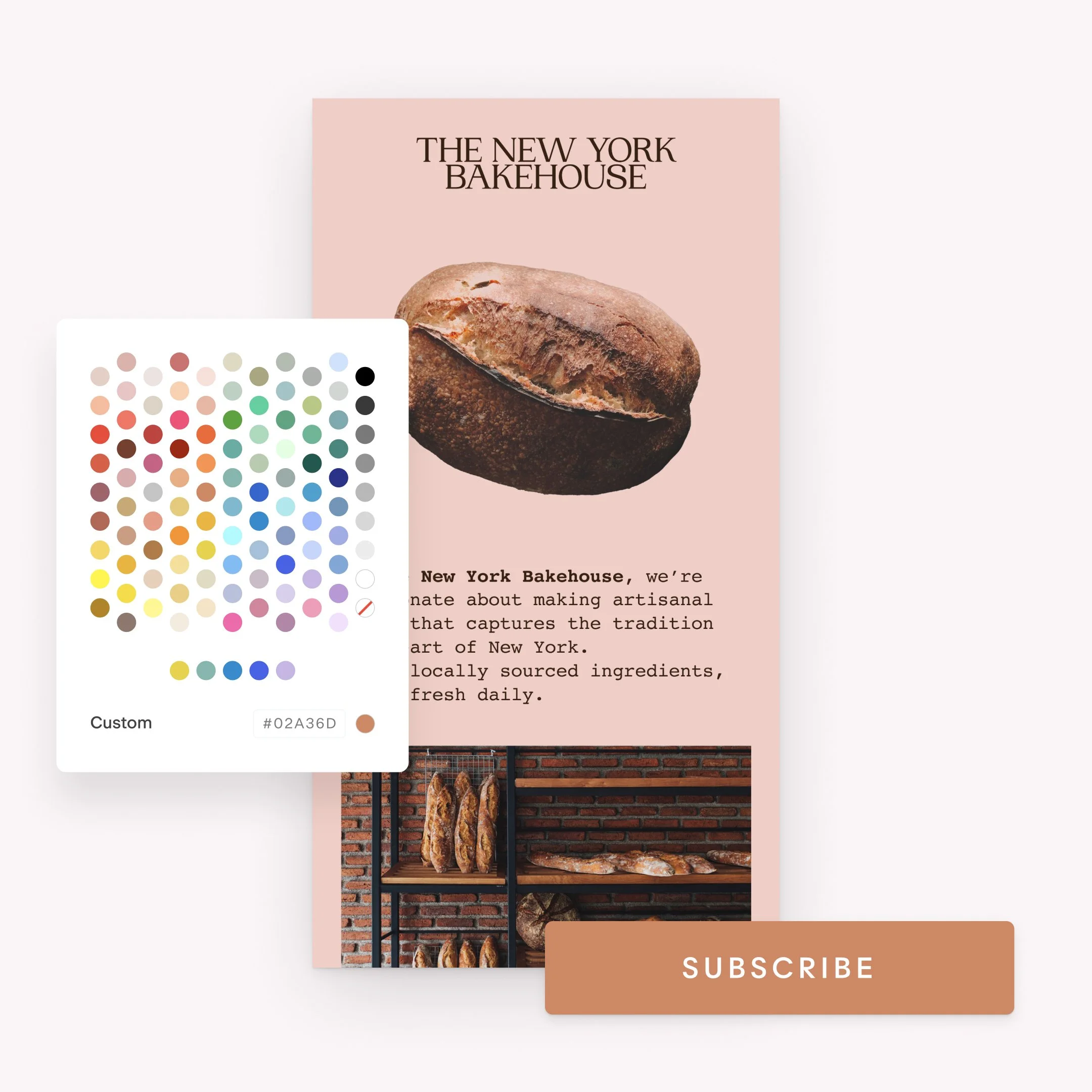
Flodesk was built design-first, and you feel it in about thirty seconds. The templates are genuinely beautiful — the kind you actually want to send, not the kind you wrestle into looking okay.
I can lock in my brand colors and fonts so every email feels unmistakably mine, the same way my packaging and my pins and my course pages do. Consistency like that is what turns a collection of touchpoints into a brand. It’s what makes someone think, before they've read a word, oh, this is her.
And it’s effortless in a way that matters when you’re a team of one. I’m not coding. I’m not fighting a clunky builder. I drag, I drop, I tweak, and it looks like I hired someone. For those of us whose whole offer is “I make things beautiful,” that alignment isn’t a nice-to-have. It’s the entire point.
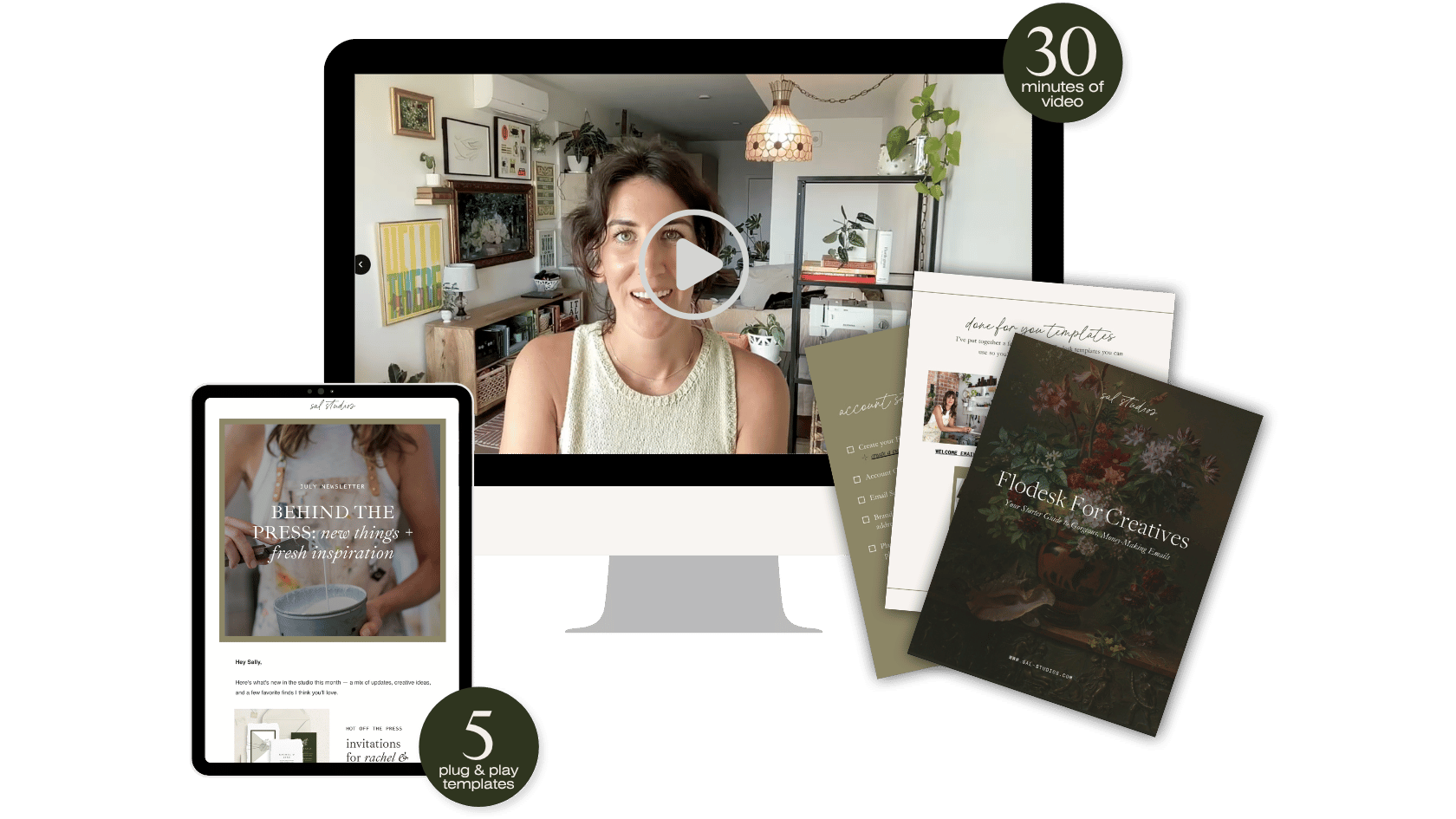
A look inside my mini course, Flodesk for Creatives
The forms and the templates I actually use every day
Two features I’d genuinely grieve if they vanished.
First, the opt-in forms and landing pages. They’re included, they’re customizable, and they match my emails — same fonts, same colors, same feeling — so the journey from “freebie sign-up” to “first email” never has a jarring seam.
Nothing breaks the spell. That seamlessness is doing quiet conversion work the whole time.
Second, saved templates. Once I’ve built something I love, I save it and reuse the bones. New content, same polish, a fraction of the time. When you’re producing for two brands solo, that kind of repeatability is the difference between “sustainable” and “burnt out by Thursday.”
The part where I make money while I sleep
Here’s the unglamorous truth behind a number I’m a little proud of: I made nearly $4,000 this month from Sal Studios, and I spent almost no active hours earning it.
Sal Studios is mostly passive now — online courses, which means the teaching is done and the systems do the selling.
The setup is embarrassingly simple: a genuinely useful freebie I market on Instagram and Pinterest, and an automated email sequence that welcomes new subscribers, builds trust, and leads them to the course that takes them further. One freebie. One sequence. Running all month while I’m cooking dinner or out walking the dog.
Flodesk’s workflows are what make that possible — and they’ve quietly become one of my favorite things about the platform. The branching logic is genuinely powerful now: open the email within an hour, go down one path; click a certain link, branch here; never open it, branch somewhere else. There’s even A/B testing for subject lines now.
Honestly? As a solo business owner, I can’t imagine needing more than this. The sequences I’ve already built make my brain hurt a little, in the good way. Powerful enough to do real work, clean enough that it actually gets built instead of sitting half-finished in a tab — that’s the whole game.
An honest word about the alternatives
Because I’d want someone to do this for me, here’s a fair, quick read on the platforms people usually weigh against Flodesk — current as of this writing.
Kit (formerly ConvertKit) is a favorite among creators who live and breathe automation and audience tagging. Its segmentation goes deeper than Flodesk’s, and it’s purpose-built for selling courses and digital products. The trade-offs: it’s deliberately text-first, so the emails look plain — closer to a nicely formatted Gmail than a designed piece — and the pricing climbed steeply, landing around $39/month for just 1,000 subscribers. If automation depth matters more to you than how your emails look, it’s worth a real look.
Mailchimp is the household name, with deep features and a huge integration library. But it’s built for general small business, not for the design-forward creative, and its free plan got dramatically smaller in early 2026 — down to a few hundred contacts. It also counts every contact against your plan, even the ones who unsubscribed. Powerful, but not the love language of a stationer.
MailerLite is the value pick, and an honest one. It’s clean, it's affordable, it’s famously easy to use, and it does a little of everything well. The templates just aren’t as stunning as Flodesk’s — which, if you’ve read this far, you already know is my whole hill.
None of these are bad. They’re built for different people. That’s the real answer to “which is best”: best for whom, doing what.
The honest caveat about Flodesk, too
Fair is fair. Flodesk retired its beloved flat-rate, unlimited-subscribers pricing for new members at the end of 2025. If you signed up before then, you kept that plan — lucky us.
New members now pay based on list size, like most platforms, across a few tiers. It can also get pricey as your list grows large, and the native integrations are thinner than the giants’, so you’ll occasionally lean on a tool like Zapier to connect things.
So who is it actually for? Solo creatives, course sellers, designers, makers — people whose brand lives and dies by how things look, who want a clean path to selling, and who’d rather spend their energy creating than configuring. People, basically, like me.

Where I’d start if I were you
If your emails don’t yet feel like an extension of the beautiful work you already make, that’s the gap to close. Start with one thing: a freebie worth handing over an email address for.
Then a short, warm sequence that leads somewhere. Make it look like you — same colors, same fonts, same care you put into everything else.
That small, consistent system is what’s been quietly paying me while I sleep. And it started with deciding that my emails deserved to be as considered as the rest of my work.
Beautiful is not the opposite of effective. For us, it’s the whole strategy.
Ready to make your emails look as good as the rest of your work? That’s exactly what I walk you through inside Flodesk for Creatives — my mini course on building a beautiful, on-brand email engine that quietly sells while you sleep. Come build yours.