
Vintage Stamps, Explained: Why That “Old” Postage Is Still Perfectly Usable
There’s a specific kind of comment I get almost every time I post an envelope dressed in vintage stamps: wait, are those real? Can you actually mail something with those?
I get why people ask. A stack of stamps in soft, faded colors, worth 3 cents or 8 cents or 22 cents apiece, doesn’t look like postage in the way we’re used to thinking about postage. It looks like decoration. Something borrowed from a scrapbook, not something the post office would actually accept.
So let’s clear it up, because once you understand the logic, it opens up a whole layer of detail you can bring to your own mail.
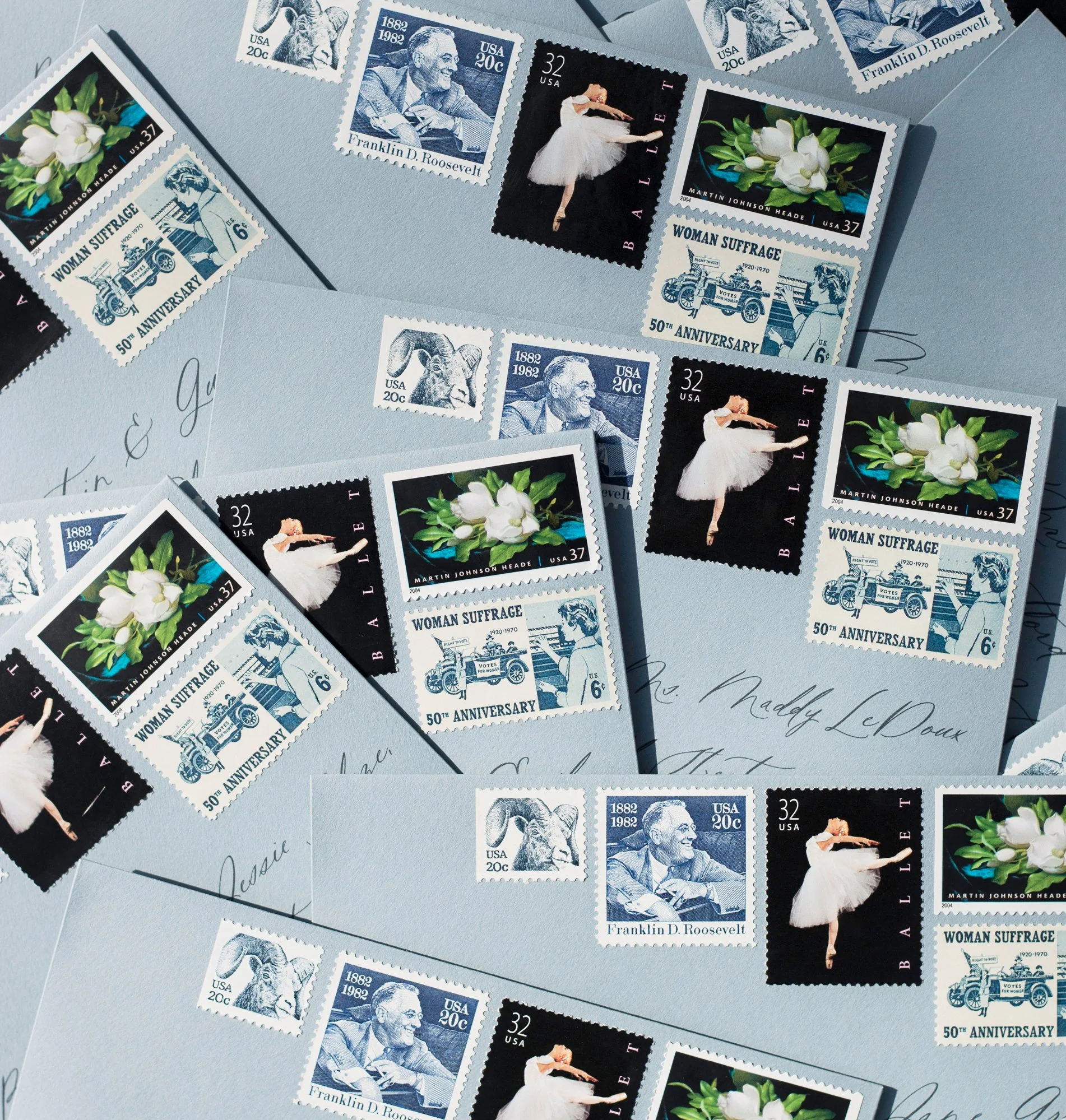
They’re not fake. They’re just no longer printed at your local post office.
Vintage stamps are real, valid United States postage.
Every one of them was printed, sold, and never used — which means the value on the stamp is still honored by the post office today.
What makes them “vintage” isn’t that they’ve expired. Stamps don’t expire. It’s that they were issued by the post office years or decades ago, at whatever the postage rate was then, and they’ve been quietly waiting (unused) in someone’s collection ever since.
Here’s the part that trips people up: postage rates change almost every year. A Forever Stamp today covers one rate. A stamp printed in 1998 covers whatever the rate was in 1998 — a number that’s almost certainly lower than what you need now.
The stamp itself isn’t invalid. It’s just no longer enough, on its own, to cover today’s postage.
Which brings us to the actual mechanic.
The math is the whole trick
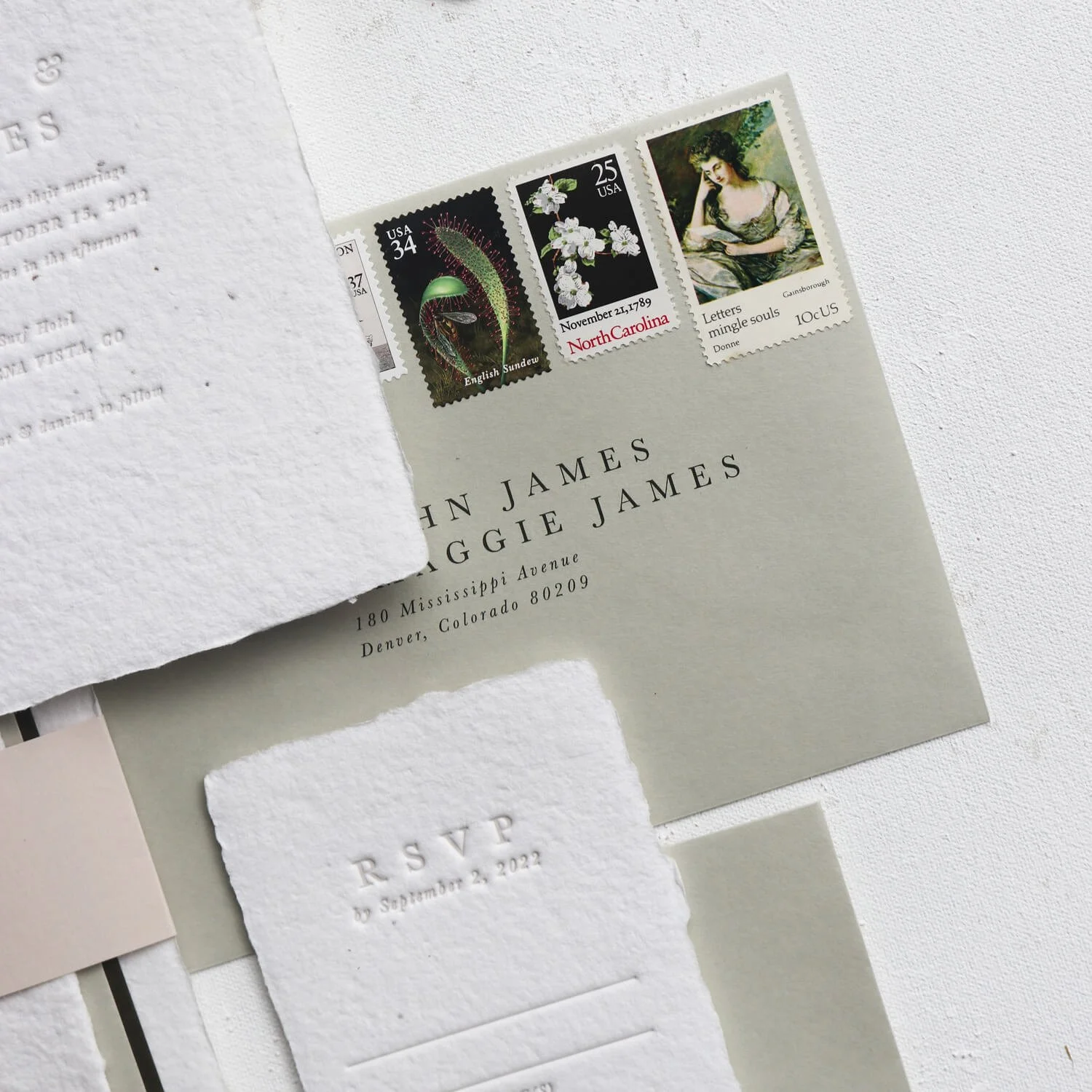
Instead of reaching for one stamp, you build a small collection of them.
You mix and match denominations until they add up to the postage you need for that specific envelope. It’s less “buy a stamp” and more “assemble a stamp.”
A simple example: if today’s letter rate is 73 cents, you might combine a 3-cent, a 10-cent, an 8-cent, and a 52-cent stamp. Four little pieces of history, one correct total. The post office doesn’t care that they were printed forty years apart. They care that the math adds up.
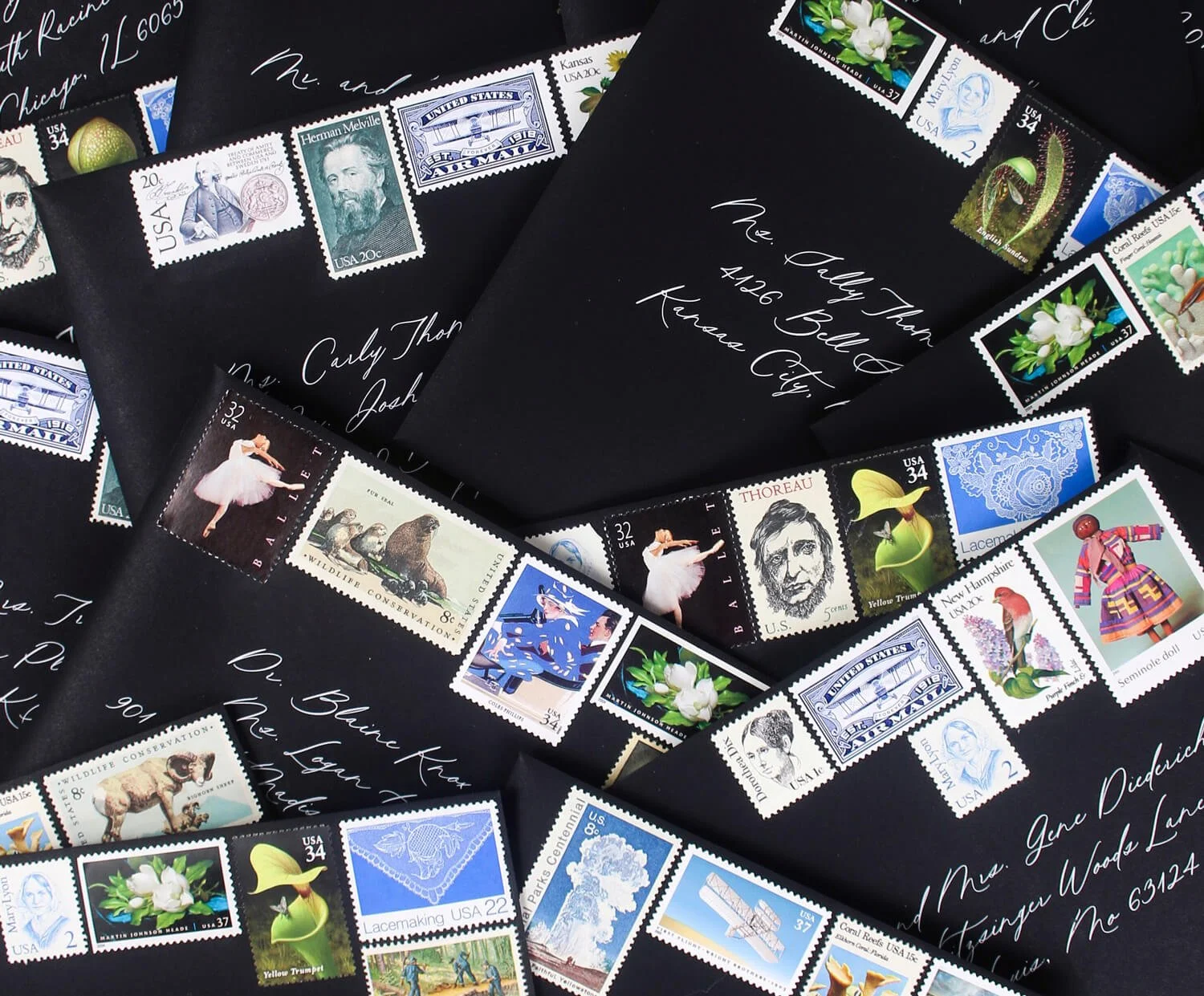
This is also where the creative part lives. Once you know the rate you’re solving for, you’re not just hunting for “postage” — you’re curating.
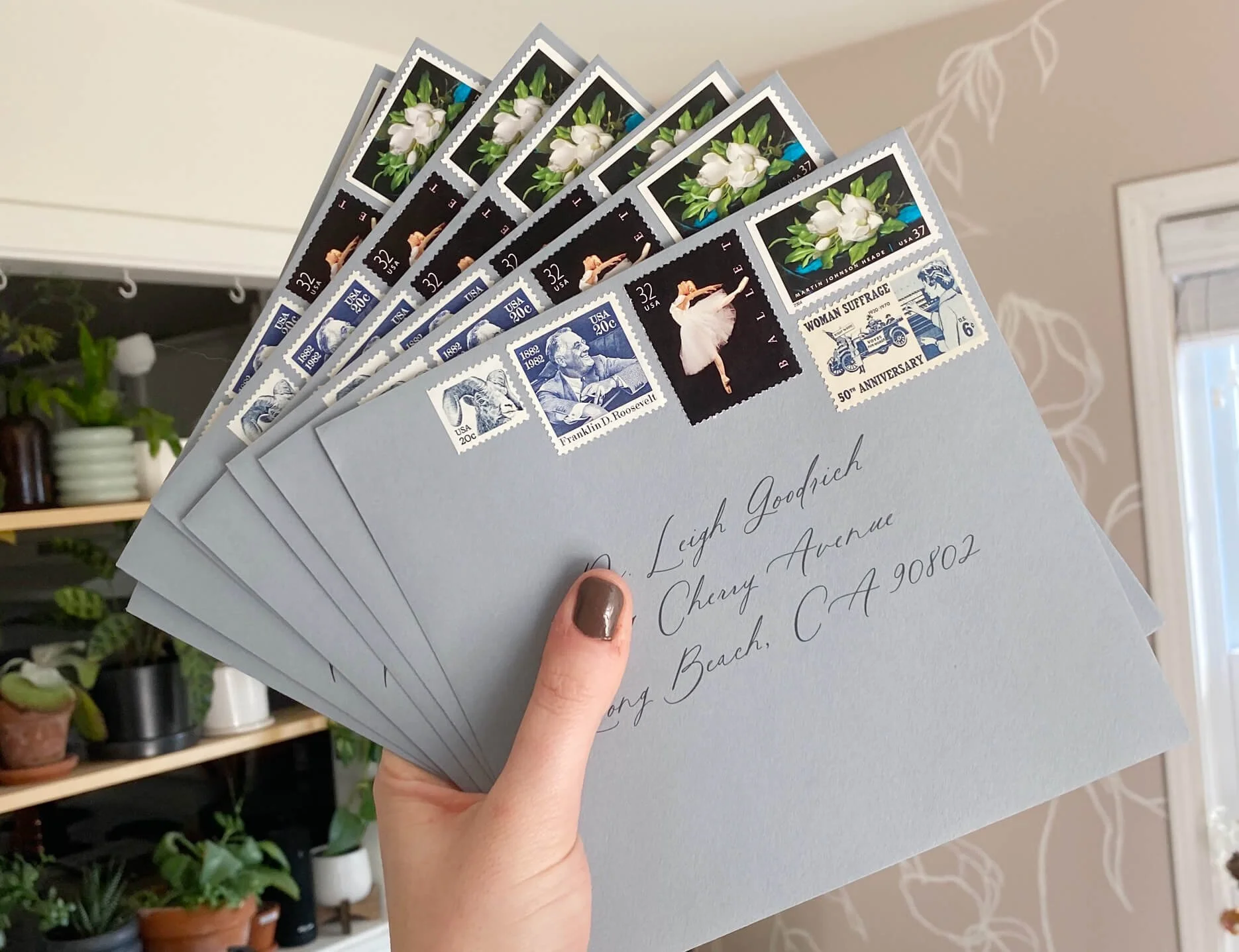
You can pull stamps in a specific color palette, a shared era, a theme that matches the envelope they’re riding on. A wedding invitation in dusty blues and creams can wear stamps that were printed decades before the couple was born, and somehow it still looks like it was chosen on purpose. Because it was.
Why go to the trouble
A Forever Stamp is reliable. It’s also invisible — nobody has ever paused before opening an envelope because of a Forever Stamp.
A hand-picked stack of vintage stamps is a small, specific signal that someone thought about this. It’s the kind of detail a guest notices before they’ve even opened the envelope, and it’s one of the few places in a mailed piece where you get to add color, texture, and history without changing a single word of the content inside.
“But will the post office actually accept it?”
Yes.
As long as the total value of the stamps covers the required postage, there’s no special permission needed and no separate process.
You hand it over (or drop it in the mail) exactly like you would any other stamped envelope.
The only real risk is under-paying the postage by accident, which is why knowing your current rate before you start collecting stamps for a project matters more than knowing anything else.
Where to Start
If this is new territory, the hardest part isn’t the math — it’s knowing where to actually source vintage stamps that are in good condition and reasonably priced.
Grab my free guide to sourcing vintage stamps (exactly where I buy mine, what to look for, what to skip), and if you want to go deeper, my vintage stamp course walks you through building your own stash from scratch.